Troubleshooting of HTTP errors: Difference between revisions
Tag: wikieditor |
No edit summary Tag: wikieditor |
||
| (2 intermediate revisions by the same user not shown) | |||
| Line 7: | Line 7: | ||
__TOC__ | __TOC__ | ||
== | == Troubleshooting HTTP Status Errors == | ||
=== 400 Bad Request === | |||
Root cause: The request itself is malformed. According to the spec, this means "the server cannot or will not process the request due to something perceived to be a client error" — such as invalid syntax, incorrect request message framing, or deceptive request routing. | |||
== 403 Forbidden | Possible fix: | ||
* Review and correct the request headers | |||
=== 403 Forbidden === | |||
See: [[How to fix the 403 forbidden error]] | See: [[How to fix the 403 forbidden error]] | ||
== 404 | === 404 Not Found === | ||
Fix: Verify that the URL is correct. For more details, see | |||
[[404 Not Found]], possible solutions for pages not found". | |||
=== 405 Method Not Allowed === | |||
Fix: Confirm that the target resource supports the HTTP method you're using. For example, the endpoint may only accept POST requests while you're sending a GET request. | |||
=== 414 Request-URI Too Large === | |||
Fix: Switch from GET to POST so the data is sent in the request body instead of the URL. | |||
== | === 415 Unsupported Media Type === | ||
Fix: Explicitly declare the correct Content-Type or Content-Encoding in the request, or access the data directly. For instance, when calling a RESTful API, this error can often be resolved by adding the following header: | |||
<pre> | <pre> | ||
Content-Type: application/json | Content-Type: application/json | ||
</pre> | </pre> | ||
== 429 Too Many Requests == | === 429 Too Many Requests === | ||
* | Root cause: | ||
* The client is hitting the website or API more frequently than the service allows. | |||
Fixes: | |||
* '''Throttle your requests''': Add or increase a delay between requests based on your usage pattern and the service's limits (e.g., pause 1 second between calls). | |||
* '''Check the API rate limits''': Consult the provider's documentation for limits such as Requests Per Minute (RPM) or Requests Per Day (RPD), and find out whether you can request a higher quota. | |||
* '''Use exponential backoff''': Detect HTTP 429 responses in your | |||
application, then retry with progressively longer delays (e.g., 2s → 4s → 8s) until the request succeeds or a maximum retry count is reached. | |||
=== 502 Bad Gateway === | |||
Cause: | Cause: | ||
* | * A failure between upstream network devices/servers — not something the end user can fix directly. | ||
Fixes: | |||
* | * Hard-refresh the page to bypass the browser cache | ||
* | * Wait a moment and try again | ||
== Error 1020: Access Denied == | === Error 1020: Access Denied === | ||
* See | * See the linked guide on resolving Error 1020 (Access Denied) to restore access to your website. | ||
== HTTP Cats or Dogs == | |||
<div style="zoom: 0.4;"> | |||
https://http.cat/200.jpg | https://http.cat/200.jpg | ||
From HTTP Cats | </div> | ||
From [https://http.cat/ HTTP Cats] | |||
Related websites: | Related websites: | ||
Latest revision as of 16:49, 11 June 2026
 This article "Troubleshooting of HTTP errors" is still being written. If there are any incomplete parts, you are welcome to directly edit them. 這篇文章「Troubleshooting of HTTP errors」內容還在撰寫中,如果有不完整的部分,歡迎你直接動手修改。 This article "Troubleshooting of HTTP errors" is still being written. If there are any incomplete parts, you are welcome to directly edit them. 這篇文章「Troubleshooting of HTTP errors」內容還在撰寫中,如果有不完整的部分,歡迎你直接動手修改。
|
HTTP status code
Troubleshooting HTTP Status Errors[edit]
400 Bad Request[edit]
Root cause: The request itself is malformed. According to the spec, this means "the server cannot or will not process the request due to something perceived to be a client error" — such as invalid syntax, incorrect request message framing, or deceptive request routing.
Possible fix:
- Review and correct the request headers
403 Forbidden[edit]
See: How to fix the 403 forbidden error
404 Not Found[edit]
Fix: Verify that the URL is correct. For more details, see 404 Not Found, possible solutions for pages not found".
405 Method Not Allowed[edit]
Fix: Confirm that the target resource supports the HTTP method you're using. For example, the endpoint may only accept POST requests while you're sending a GET request.
414 Request-URI Too Large[edit]
Fix: Switch from GET to POST so the data is sent in the request body instead of the URL.
415 Unsupported Media Type[edit]
Fix: Explicitly declare the correct Content-Type or Content-Encoding in the request, or access the data directly. For instance, when calling a RESTful API, this error can often be resolved by adding the following header:
Content-Type: application/json
429 Too Many Requests[edit]
Root cause:
- The client is hitting the website or API more frequently than the service allows.
Fixes:
- Throttle your requests: Add or increase a delay between requests based on your usage pattern and the service's limits (e.g., pause 1 second between calls).
- Check the API rate limits: Consult the provider's documentation for limits such as Requests Per Minute (RPM) or Requests Per Day (RPD), and find out whether you can request a higher quota.
- Use exponential backoff: Detect HTTP 429 responses in your
application, then retry with progressively longer delays (e.g., 2s → 4s → 8s) until the request succeeds or a maximum retry count is reached.
502 Bad Gateway[edit]
Cause:
- A failure between upstream network devices/servers — not something the end user can fix directly.
Fixes:
- Hard-refresh the page to bypass the browser cache
- Wait a moment and try again
Error 1020: Access Denied[edit]
- See the linked guide on resolving Error 1020 (Access Denied) to restore access to your website.
HTTP Cats or Dogs[edit]
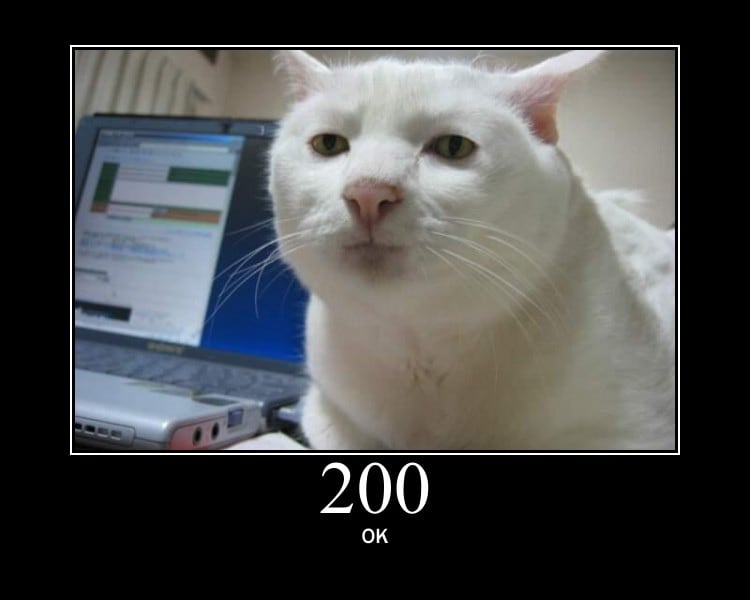
From HTTP Cats
Related websites:
Other possible root causes[edit]
- CDN (Content delivery network)
Mock HTTP status error page tools[edit]
The testing sites that can return 500 and various other HTTP status codes on demand
- The Internet[1]
- httpstatus.io: A bulk checker for HTTP status codes, headers, and redirects, which also offers mock endpoints, e.g. 500
- Postman Echo: A request/response testing service with status code endpoints, e.g. 500
Related pages[edit]
References[edit]
Troubleshooting of ...
- PHP, cUrl, Python, selenium, HTTP status code errors
- Database: SQL syntax debug, MySQL errors, MySQLTuner errors or PostgreSQL errors
- HTML/Javascript: Troubleshooting of javascript, XPath
- Software: Mediawiki, Docker, FTP problems, online conference software
- Test connectivity for the web service, Web Ping, Network problem, Web user behavior, Web scrape troubleshooting
Template